

Every Christmas season, you might hear one Christmas song echoing through shopping malls, soaring from church choirs, or filling your home speakers with its unmistakable cry: Hallelujah! For the Lord God omnipotent reigneth!
It’s powerful. It’s joyful. It’s one of the most famous pieces of music ever written.
But what exactly is Handel’s Messiah and why has it stirred hearts for nearly 300 years?
Handel’s Messiah isn’t an opera or a stage play. It’s an oratorio, a large musical work for orchestra, choir, and soloists that tells a story through Scripture set to music. Unlike an opera, an oratorio has no costumes, props, or acting. The drama comes from the music itself.
What makes Messiah so unique is that every word comes directly from the Bible.
The text—called the libretto—was compiled by Charles Jennens, a devout Christian who wove together Old and New Testament passages that trace God’s plan of salvation.
How Handel Composed Messiah
In the summer of 1741, George Frideric Handel received Jennens’s compilation of Scriptures. Inspired, he began composing—and completed all 260 pages of music in just 24 days.
His assistant later recorded Handel saying that while writing, he felt as though “he did see all Heaven before him.”
Whether that moment was literal or poetic, the result was extraordinary.
The Three Parts of Messiah: A Musical Journey Through the Gospel
Part I – The Promise and Birth of Christ
This section is filled with Old Testament prophecy and the announcement of Christ’s coming.
“For unto us a Child is born…” (Isaiah 9:6)
It culminates in the joy of Jesus’ birth.
Part II – Christ’s Suffering, Sacrifice, and Victory
Part II moves through Christ’s rejection, crucifixion, resurrection, and triumph over death.
It concludes with the most famous movement of the entire oratorio:
The Hallelujah Chorus.
Part III – Eternal Life and Christ’s Reign
The final section focuses on the resurrection hope believers have in Christ.
“I know that my Redeemer liveth.”
It ends with the promise of Christ’s eternal rule.
Why Do People Stand During the “Hallelujah Chorus”?
According to tradition, during one of the early London performances, King George II stood when he heard the Hallelujah Chorus. No one knows exactly why—perhaps reverence, awe, or simple surprise—but when the king stood, the entire audience followed.
The custom stuck.
And today, audiences around the world still rise to their feet as the chorus begins.
Why Messiah Still Captivates Us Today
Handel’s Messiah isn’t just beautiful—it’s the Gospel in sound.
It proclaims:
- Jesus is the promised Savior.
- He bore the sins of humanity.
- He rose victorious and reigns forever
In a world longing for hope, this 18th-century masterpiece still points us to the same unchanging truth:
“And He shall reign for ever and ever.”So the next time a choir bursts into the Hallelujah Chorus, don’t just listen—worship.
Because the story behind it is as powerful today as it was when Handel first wrote it.
Now, revisit the moment Charles Morris explored the very house where Handel composed his masterpiece.
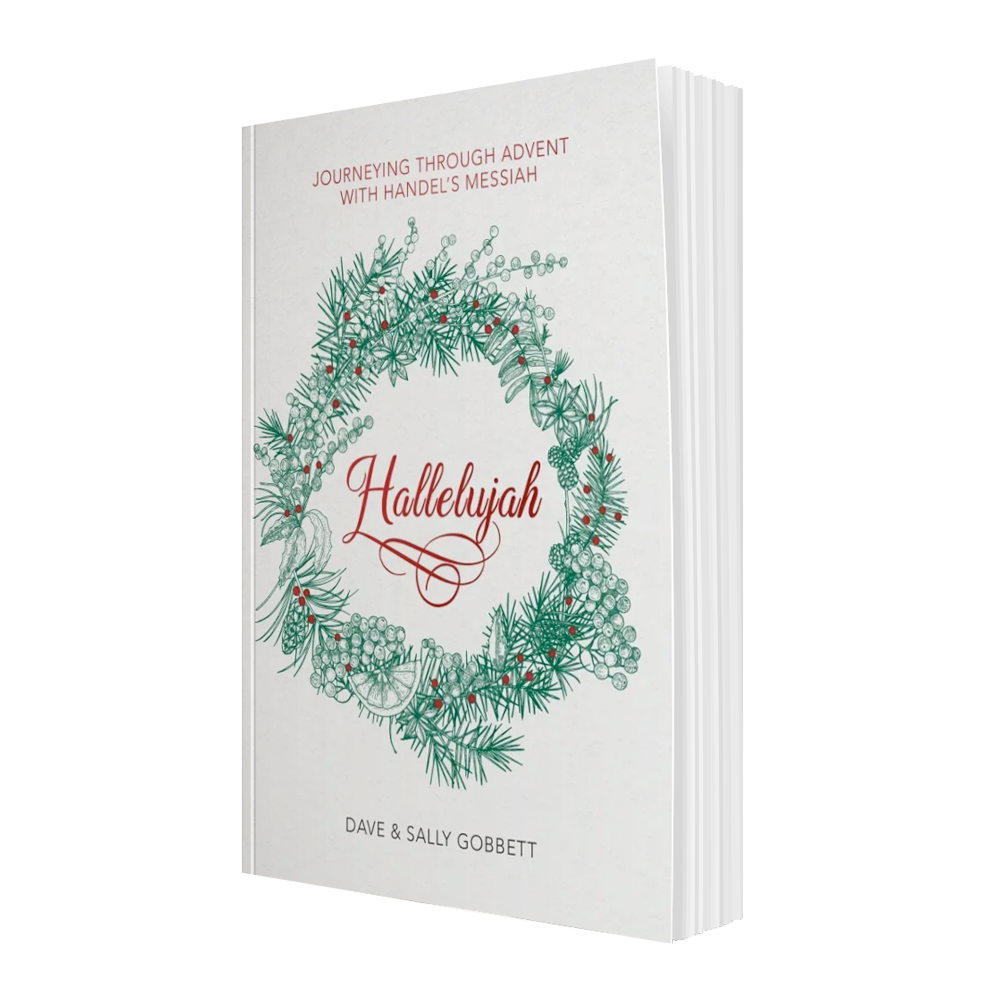
Hallelujah! Journeying Through Advent with Handel’s Messiah
Let Handel’s Messiah Guide You to Worship this Advent
Handel’s Messiah is one of the most famous pieces of music ever written with lyrics taken directly from Scripture. In Hallelujah!: Journeying Through Advent with Handel’s Messiah, Dave and Sally Gobbett have paired 26 devotional reflections with movements from Handel’s timeless masterpiece. Each short devotion includes a prayer and a link to the corresponding music, making it ideal for personal or family use, and small group fellowships during the Christmas season. Worship the newborn King through this profound pairing of Scripture and song.
📖 Download a preview of the book here.
🎶 Listen along with Handel: Messiah by The Sixteen on Spotify.